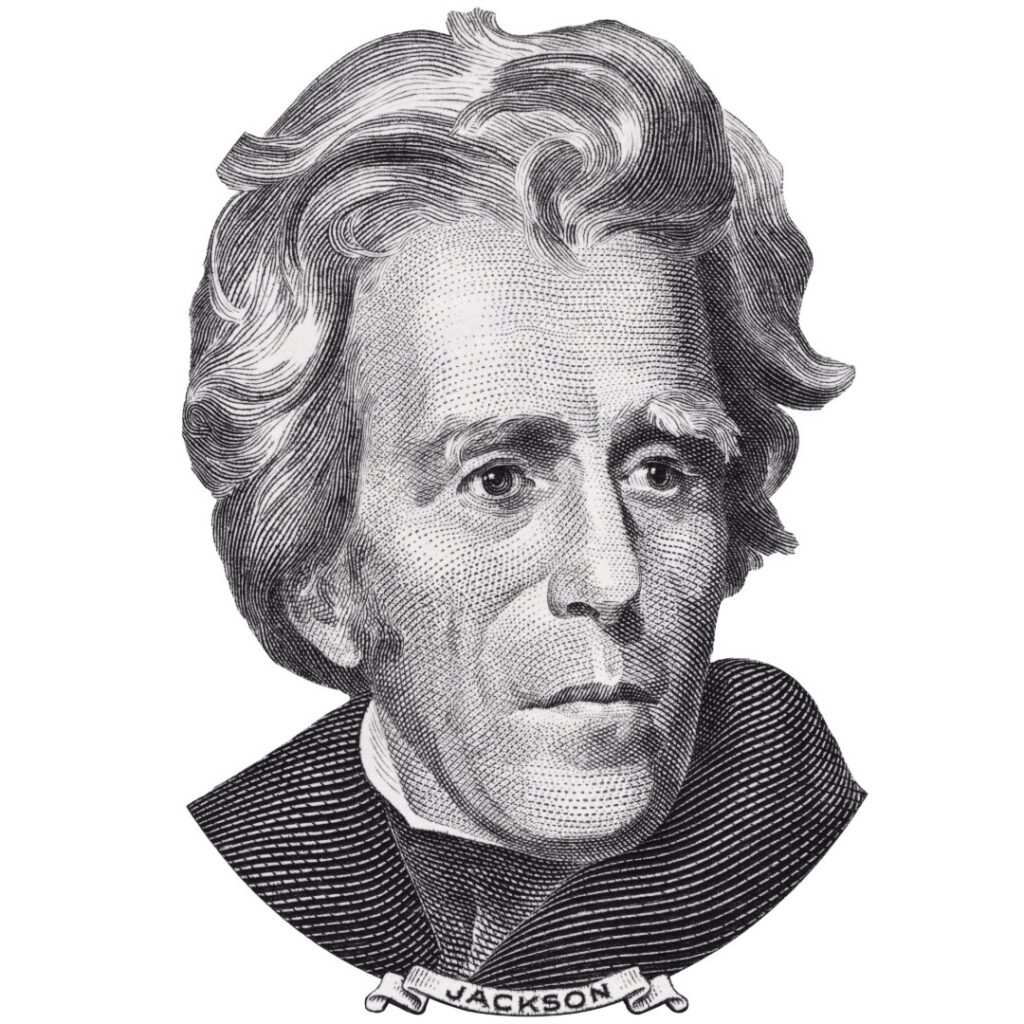
For much of the twentieth century, American history textbooks presented a relatively simple explanation for the economic collapse known as the Panic of 1837. According to the traditional narrative, President Andrew Jackson’s destruction of the Second Bank of the United States destabilized the financial system, leading directly to financial panic and a prolonged depression during the late 1830s and early 1840s. In this account, Jackson’s populist hostility toward centralized banking removed the stabilizing institution that had regulated credit and restrained speculation. The resulting expansion of poorly regulated state banks, followed by a collapse in confidence, supposedly triggered the crisis.
Over the past half-century, however, economic historians and cliometricians have substantially revised this interpretation. Using quantitative data, international trade records, and new analytical frameworks, modern scholarship portrays the Panic of 1837 not as a simple consequence of Jackson’s Bank War but as the result of a complex interaction between global financial forces, commodity markets, domestic policies, and speculative investment cycles. While the traditional interpretation still appears in simplified form in some textbooks, the consensus among economic historians today is far more nuanced.
The Traditional Textbook View
The classic narrative of the Panic of 1837 emerged largely from nineteenth-century political debates and was later repeated in twentieth-century textbooks. In this interpretation, the central cause of the crisis was Andrew Jackson’s decision to veto the recharter of the Second Bank of the United States in 1832 and to remove federal deposits from the bank shortly afterward.
Supporters of the bank, particularly the Whig Party, argued that the institution functioned as a stabilizing force in the American economy. By regulating state banks and controlling the money supply, it allegedly prevented excessive lending and speculation. When Jackson dismantled the bank, this regulatory authority disappeared. State-chartered banks expanded credit aggressively, fueling a speculative boom in western land purchases. Eventually, the bubble burst, causing bank failures and a collapse in economic activity.
In this narrative, the Panic of 1837 represents a cautionary tale about the dangers of destroying a central financial authority. Textbook discussions often frame the episode as an early example of the need for central banking in the United States.
Elements of this explanation are not entirely incorrect. Domestic financial policies—including Jackson’s “Specie Circular” requiring payment for federal land in gold or silver and the redistribution of federal deposits to state “pet banks”—did contribute to instability in the banking system. However, modern historians argue that these policies alone cannot explain the scale and timing of the crisis.
The Rise of the Modern Economic History Interpretation
Beginning in the 1960s, economic historians began to reexamine the Panic of 1837 using quantitative methods associated with the “cliometric revolution.” One of the most influential works in this shift was economist Peter Temin’s 1969 book The Jacksonian Economy, which challenged the conventional interpretation that Jackson’s destruction of the national bank caused the crisis. Temin argued that broader economic forces were more important than domestic political decisions.
Temin’s research showed that the United States experienced a major surge in international capital flows and commodity price fluctuations in the 1830s. These forces produced a boom-and-bust cycle that was closely tied to developments in global markets rather than simply domestic banking policy.
Subsequent scholars expanded on this approach. Historians and economists such as Douglass North, Richard Timberlake, Peter Rousseau, and Eric Hilt have analyzed the crisis through the lens of international trade, monetary flows, and institutional development.
The result has been a reinterpretation of the Panic of 1837 as part of a broader transatlantic financial crisis rather than a purely American event.
Global Capital Flows and Commodity Markets
One of the most important findings of modern research is the central role of international finance. During the early 1830s, the United States attracted large inflows of British capital. British investors purchased bonds issued by American states to finance canals, railroads, and other infrastructure projects. These investments helped fuel rapid economic expansion across the United States.
At the same time, global commodity markets were undergoing dramatic shifts. Cotton, the United States’ most important export, served as collateral for many loans in the American financial system. When cotton prices collapsed in 1837, the value of that collateral fell sharply. The sudden decline in commodity prices destabilized banks and merchants throughout the economy.
These developments were closely tied to monetary conditions in Britain. By 1836 the Bank of England began tightening credit and raising interest rates in order to protect its gold reserves. Because international capital markets were already highly integrated, this tightening transmitted financial stress to American banks and merchants.
In effect, the American economy was hit by a global credit contraction. Modern scholars therefore view the Panic of 1837 as one of the earliest examples of an international financial crisis.
Specie Flows and Monetary Dynamics
Another major focus of modern scholarship concerns the movement of gold and silver—known as specie—in the international economy. In the early 1830s, significant quantities of silver flowed into the United States through global trade networks involving Mexico, China, and Britain. This inflow increased bank reserves and enabled a rapid expansion of credit.
Eventually, however, these flows reversed. As British monetary policy tightened and international trade patterns shifted, specie began to leave the United States. The resulting contraction in bank reserves forced financial institutions to restrict lending, contributing to the panic.
Economic historians such as Peter Rousseau and Richard Timberlake have explored how these monetary movements interacted with domestic policies, including Jackson’s redistribution of federal deposits and the Specie Circular. Their research suggests that the crisis resulted from a combination of international shocks and domestic monetary changes rather than a single policy mistake.
Infrastructure Speculation and State Debt
Another element emphasized by modern scholars is the role of speculative investment in infrastructure projects. During the 1830s, American states borrowed heavily to finance canals, railroads, and other transportation systems. Much of this borrowing was funded by British investors seeking higher returns abroad.
When the international credit cycle reversed, many of these projects became financially unsustainable. Several states eventually defaulted on their debts, further undermining confidence in American financial markets. This infrastructure bubble contributed to the broader collapse of credit that characterized the Panic of 1837.
The Current Scholarly Consensus
Today, most economic historians view the Panic of 1837 as the result of multiple interacting forces:
- Global capital flows between Britain and the United States
- A collapse in cotton prices
- Speculative land and infrastructure investment
- International movements of gold and silver
- Domestic monetary policies such as the Specie Circular
- The absence of a central banking institution capable of coordinating monetary responses
In this interpretation, the Bank War remains part of the story but not the decisive cause. Instead, the crisis reflects the vulnerability of the early American economy to global financial cycles and commodity price fluctuations.
The Textbook Narrative Today
Although academic scholarship has shifted significantly, simplified versions of the older interpretation still appear in many high school and introductory college textbooks. Educational narratives often emphasize the political drama between Andrew Jackson and Nicholas Biddle, the president of the Second Bank of the United States, because it provides a clear storyline and fits neatly into broader themes about populism and federal power.
However, more recent textbooks and college-level economic history courses increasingly present the Panic of 1837 as a complex economic event shaped by international markets and structural factors rather than a single political decision.
Conclusion
The historiography of the Panic of 1837 illustrates how interpretations of economic history evolve as new methods and data become available. The older textbook view portrayed the crisis primarily as the consequence of Andrew Jackson’s destruction of the national bank. Modern economic historians, by contrast, see the panic as the product of interconnected global financial forces, commodity price movements, infrastructure speculation, and monetary flows.
Scholars such as Peter Temin, Douglass North, Peter Rousseau, and Richard Timberlake have played key roles in developing this revised understanding. Their research demonstrates that the early American economy was far more integrated into global financial systems than earlier historians realized.
In short, what once appeared to be a purely domestic political mistake now looks more like one of the first major crises of the modern international financial system.